




A practical way to find hidden technology risks, operational gaps and dependencies before they become business problems.
- A system can remain online while still carrying serious business risk.
- Technology reviews should follow critical business workflows, not only applications and servers.
- The output should be a prioritised action plan, not a long list of technical observations.
Technology risk assessment: why “working” is a weak measure
Most technology risk remains invisible during normal operations. A website loads, the team can access the CRM and orders continue to move. That proves availability today. It does not prove resilience, security, ownership or scalability.
The more useful question is: what happens when a key person is unavailable, an integration fails, credentials are compromised, data needs to be restored, or the business doubles in volume?
Five gaps that deserve management attention
Ownership: Who controls domains, cloud accounts, source code, licences and administrator access?
Continuity: Are backups usable, recovery steps documented and critical suppliers replaceable?
Security: Are permissions, updates, logs and incident responsibilities reviewed regularly?
Process: Which important workflows still depend on spreadsheets, manual re-entry or one employee’s memory?
Capacity: Can the current system support new locations, products, teams, regulations or transaction volume?
Run the review around business impact
Start by mapping the workflows that affect revenue, customers, operations and compliance. Then connect each workflow to the applications, data, people and suppliers it depends on.
Score each gap by likelihood, business impact and difficulty of recovery. This keeps urgent operational risks separate from improvements that can be planned over time.
What the final output should look like
A useful technology review gives leadership a short list of decisions: what must be fixed now, what needs a funded roadmap, what can be accepted and what should be monitored.
Each action should have an owner, business reason, target date and clear definition of completion.
The objective is not more technology. It is a stronger business outcome with controlled risk.
A practical review checklist
- Critical systems and owners are documented
- Administrator access is controlled and recoverable
- Backups have been tested, not merely configured
- Manual hand-offs and duplicate data entry are visible
- Supplier and platform dependencies are understood
- Immediate fixes are separated from roadmap work
Not sure where your real technology risk sits? We will assess it with you.
Request a technology risk assessment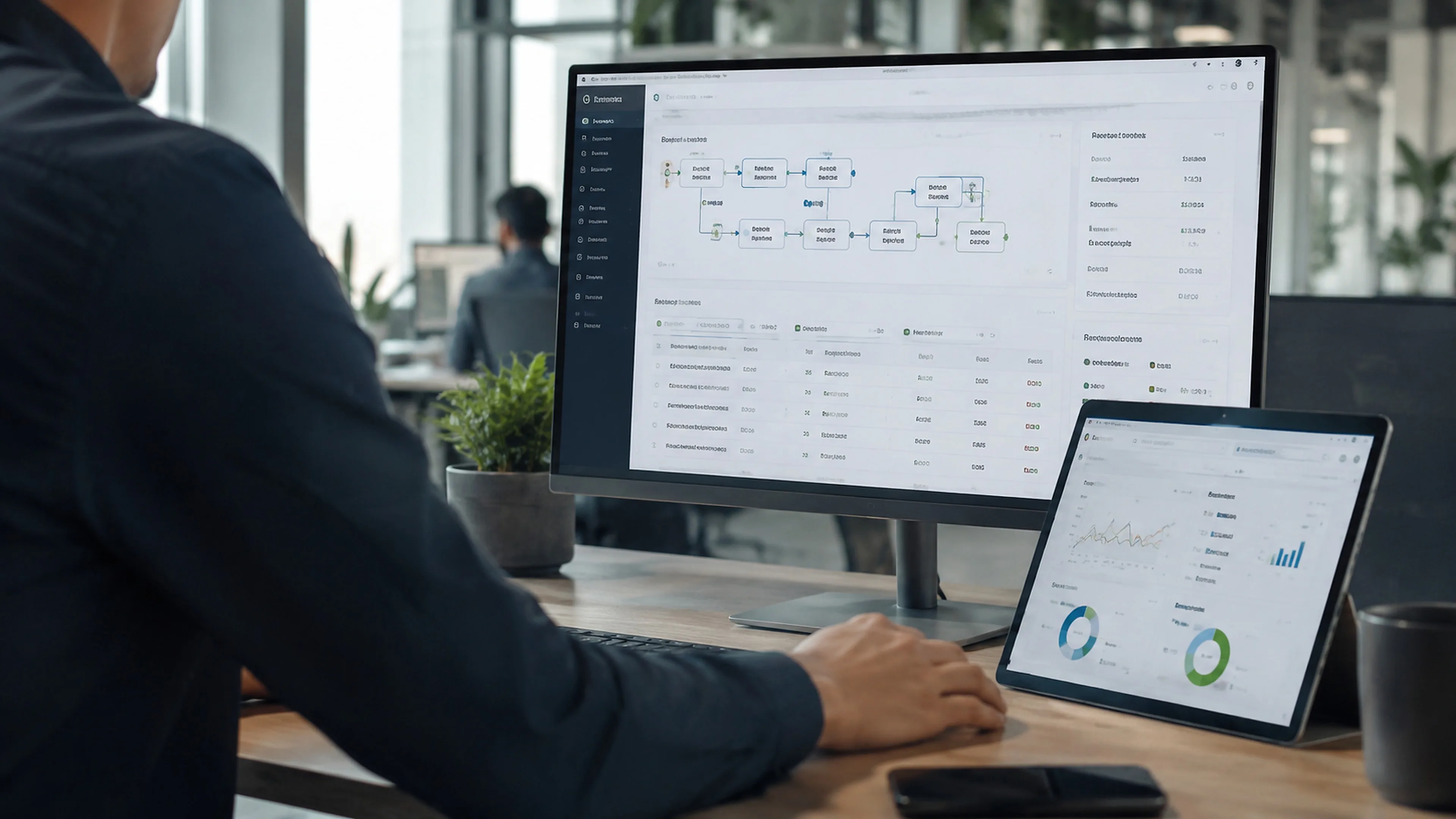 AI & AUTOMATION
 CLOUD & INFRASTRUCTURE
 DIGITAL VISIBILITY