


PPSCS
INSIGHTS / PRODUCT & SOFTWARE

Workflow-first software your team will actually use.

We design and build custom business software around how work actually flows—not around screens—so it gets adopted, replaces the workarounds, and delivers the outcome you need.

Independent since 1997Mumbai · IndiaAdvisory + build
Independent technology consultancy since 1997Mumbai, India · serving India, Dubai, London & APACAdvisory + build, not tool resale
Piramal Healthcare logoViacom18 logoLupin logoClub Mahindra logo
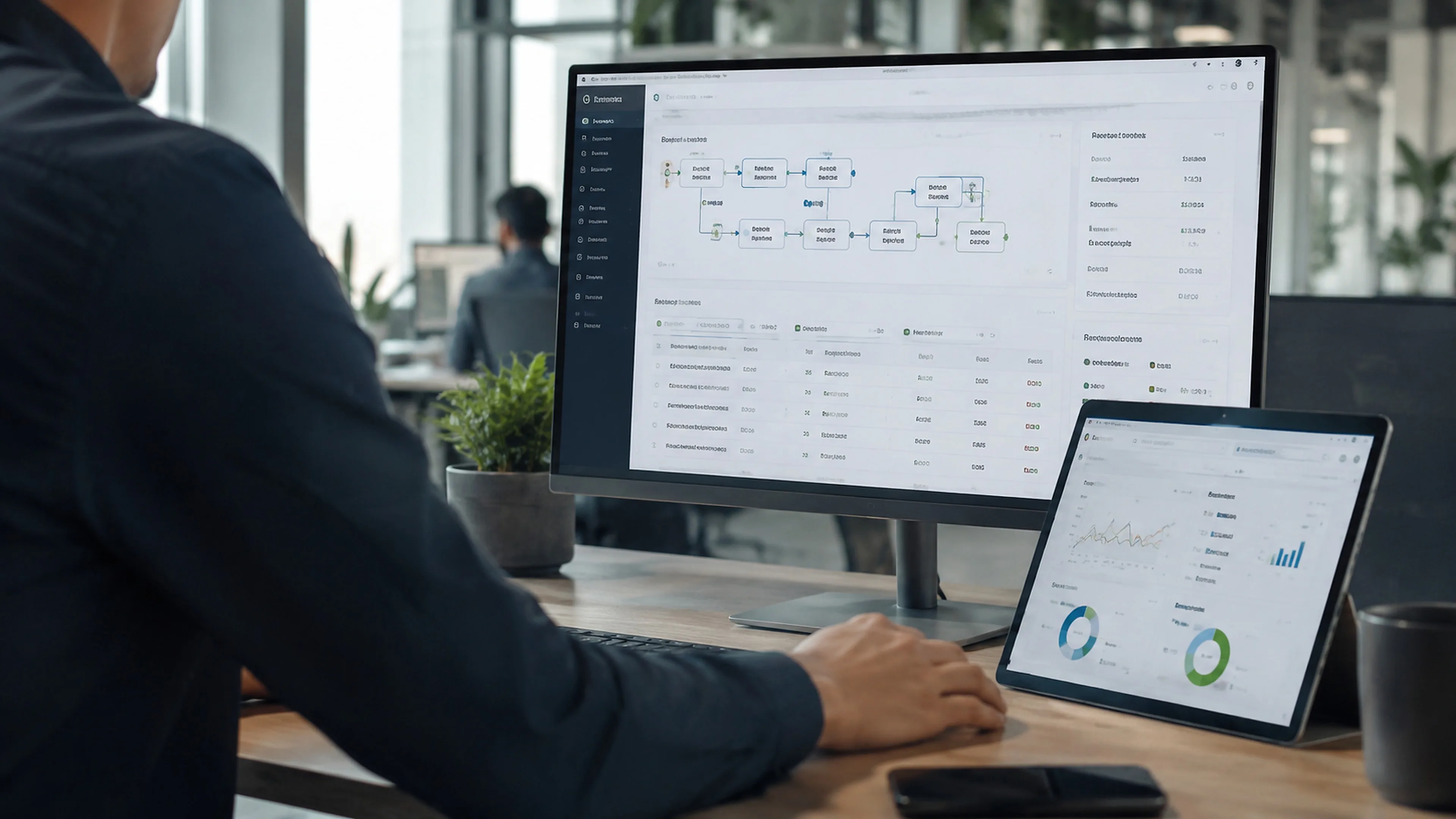
Abstract diagram illustrating Product & Software

A polished interface cannot rescue a product that misunderstands the work, decisions and exceptions happening behind it.

EXECUTIVE TAKEAWAYS
  • Map the real workflow before defining features or screens.
  • Design around decisions, exceptions and hand-offs—not only the happy path.
  • Release the smallest complete workflow, then improve it with observed use.

Workflow-first software starts below the screen

Users experience screens, but the business outcome depends on rules, data, roles, integrations and follow-up actions. Designing only the interface often moves complexity rather than removing it.

The first design artefact should explain how work moves from trigger to completion.

Observe the real process

Speak to the people doing the work, review documents and systems, and compare the official process with what actually happens. Workarounds reveal missing rules, poor data and exceptions that requirements documents overlook.

Separate essential control from habit. Not every existing step should survive into the new system.

Design decisions and exceptions

The happy path is usually easy. Value appears when the software helps with incomplete information, rejected requests, changed priorities, duplicate records and delayed approvals.

Make status, ownership and next action clear at every point.

Build a complete thin slice

Instead of developing many disconnected features, release one end-to-end workflow that a real user can complete. This exposes integration and operational issues early.

Measure completion time, errors, abandonment and support questions to guide the next iteration.

The objective is not more technology. It is a stronger business outcome with controlled risk.

A practical review checklist

  • The trigger and successful outcome are clear
  • Every step has an owner or system action
  • Required data is separated from optional data
  • Exceptions and rejection paths are designed
  • Status and next action are visible
  • The first release completes an end-to-end workflow

Not sure which workflow to build first? We will map it with you.

Request a software discovery session
WHAT YOU GET

Software judged on adoption and outcomes, not features.

When the build starts from the real workflow, the result is used every day and moves a number that matters—not another tool the team quietly routes around.

01

Higher adoption

Because the software matches how people already work, teams use it instead of reverting to old habits, email and spreadsheets.

02

Fewer workarounds

Steps that used to happen outside the system are brought inside it, so shadow processes and manual patches disappear.

03

Faster task completion

Work moves from trigger to done in fewer clicks and fewer hand-offs, because the flow is designed around the task, not the screen.

04

Fits your real process

Decisions, exceptions and approvals are built in, so the software supports the actual work rather than an idealised version of it.

05

Scales with the business

A clean workflow foundation lets you add roles, volume and new steps later without rebuilding from scratch.

06

Measurable outcomes

We track completion time, errors and abandonment against a baseline, so value is measured—not assumed from a feature list.

SCOPE

What a typical engagement includes.

Clear boundaries from the start, so everyone knows what is delivered and what depends on your team.

Included

  • Workflow discovery and mapping
  • User experience designed around the workflow
  • Software build and configuration
  • Integration with your existing systems
  • Testing and exception handling
  • Rollout, handover and support

Not included (unless scoped)

  • Unrelated hardware procurement
  • Ongoing content creation
  • Marketing and campaign work
  • Features with no workflow need
  • System replacement outside the mapped workflows

Dependencies: access to the systems and people involved, a named owner, and sign-off at decision points.

USE CASES

Where workflow-first software fits best.

Common starting points where the work is real, repeated and currently spread across tools, inboxes and spreadsheets.

OPERATIONS

Internal operations tools

Software that runs a specific internal process end to end, instead of stitching it together by hand.

PORTALS

Customer & partner portals

Portals where customers or partners complete a workflow themselves, with status and next action always clear.

WORKFLOW

Approval & case management

Requests, cases and approvals routed with rules, ownership and an audit trail from start to resolution.

MOBILE

Field & mobile workflows

Task flows built for people working away from a desk, capturing the right data at the right step.

MIGRATION

Replacing spreadsheets

Moving critical processes out of fragile spreadsheets into software with rules, roles and reliability.

INTEGRATION

Connecting disjointed tools

Joining the tools your work already touches so a single workflow flows across them without re-keying.

WHY PSCS

A build that starts from the work—not from a screen or a licence.

A fair comparison of the three common paths teams take.

CriteriaWorkflow-first build with PSCSScreen-first / feature-list buildOff-the-shelf forced to fit
Starts from the real workYesRarelyNo
High adoption by the teamYesVariesOften low
Fits your processYesPartlyProcess bends to tool
Integrates with your systemsYesAdd-onLimited
Measured on outcomesYesBy feature countBy licences bought
INDUSTRIES WE SUPPORT

Software shaped to how your industry works.

We understand the systems, hand-offs and controls behind different businesses.

HOW THE ENGAGEMENT WORKS

A clear path from workflow to working software.

We start by understanding the work, then design, build and roll out around it—measuring the result.

STEP 01

Discover the workflow

We follow the real process from trigger to completion, capturing decisions, exceptions and hand-offs.

STEP 02

Design around it

We design the interface and rules around the workflow, so the software supports the task, not the other way round.

STEP 03

Build & integrate

We build the software and connect it to your existing systems, with permissions, logging and testing in place.

STEP 04

Roll out & measure

We release a complete workflow, support adoption, and measure completion time, errors and abandonment.

CONTROL & RELIABILITY

Software you can trust in production.

Control is designed in from the first step—so speed never comes at the cost of oversight.

Built-in permissions & roles

Role-based access so the right people see and do the right things at each step of the workflow.

Logging & audit

Records of what happened, when and by whom—evidence for review, support and compliance.

Tested & supported

Exception paths are tested and the software is documented and supported after handover.

Your data, your policies

Data is handled inside your systems and policies. See our privacy policy.

COMMERCIAL APPROACH

Pricing based on scope, not a fixed list.

Pricing is based on scope, the number and complexity of workflows, and the systems involved, so there is no fixed list price. Most engagements start with a focused software discovery session. Share your requirement and we recommend a right-sized starting point—with no obligation.

Request pricing for your requirement
COMMON CONCERNS

Before you enquire.

Direct answers to the questions leaders raise most often.

01Is our process too unique to build software for?+

Uniqueness is exactly why a workflow-first build fits better than off-the-shelf. We start by mapping your real process, so the software matches how you actually work rather than forcing a generic template.

02How long does it take to build?+

It depends on the number of workflows, the decisions and exceptions involved, and the systems to integrate. We usually release one complete end-to-end workflow first, so it is in real use quickly, then extend from there.

03Can it integrate with our current tools?+

Usually yes, through integrations and APIs. Where a direct connection is not available, we design a reliable alternative so the workflow stays connected end to end.

04Will our team actually adopt it?+

That is the point of starting from the workflow. When the software matches how people work and removes their workarounds, adoption follows—and we support rollout to make sure it lands.

05What do you need from us?+

Access to the systems and people involved, a named owner, and sign-off at decision points during discovery and rollout.

06What happens after I submit the form?+

Your enquiry reaches our team by email. We review it and respond to arrange a short discovery conversation.

WORKFLOW-FIRST SOFTWARE FAQS

Questions leaders ask before building.

Direct answers on approach, integration, adoption, timelines and cost.

01What is workflow-first software?+

Workflow-first software is custom business software designed around how work actually flows—the triggers, decisions, hand-offs and exceptions—rather than around a set of screens or a feature list. Because it fits the real process, people adopt it and it delivers the outcome the work exists to produce.

02How is workflow-first software different from off-the-shelf tools?+

Off-the-shelf tools ask your process to fit their screens, so teams create workarounds and the software drifts out of use. Workflow-first software is shaped to your real process, so fewer steps are forced, fewer workarounds appear, and adoption is higher because the tool matches how people already work.

03Do you build custom software or configure existing tools?+

We start from the workflow, then choose the lightest way to support it. Sometimes that is a bespoke build; sometimes it is configuring or integrating tools you already own. The workflow decides the approach, not a preference to build everything from scratch.

04How long does a workflow-first software build take?+

It depends on the number of workflows, the decisions and exceptions involved, and the systems it must integrate with. We usually release one complete end-to-end workflow first so it is in real use quickly, then extend from there. We give a right-sized estimate after the discovery session.

05Will workflow-first software integrate with our existing systems?+

Usually yes, through integrations and APIs to the tools where your data and work already live. Where a direct connection is not available, we design a reliable alternative so the workflow stays connected end to end.

06How much does workflow-first software cost?+

Pricing is based on scope, the number and complexity of workflows, and the systems involved, so there is no fixed list price. Share your requirement and we recommend a right-sized starting point after the discovery session.

Build software your team will actually use.

Tell us the workflow that is costing you time or slipping through the cracks. We review every enquiry and respond by email to arrange a short discovery session.

Request a software discovery session
No obligation · Reviewed by our team · hello@pscsglobal.com
REQUEST A SOFTWARE DISCOVERY SESSION

Tell us the workflow you need software for.

Share the process under pressure and the outcome you need. We will review it and come back with a practical view of the workflow-first software that would fit best.

Related insights.

View all insights ↗
SELECTED CLIENTS

Trusted by organisations across industries.

Zen logo
Cloud Tel logo
CallTawk logo
JetPrivilege logo
Star Alliance logo
Viacom18 logo
Accelya logo
Club Mahindra logo
Lupin logo
IndiaPages logo
Riverdale International logo
VR Unreal logo